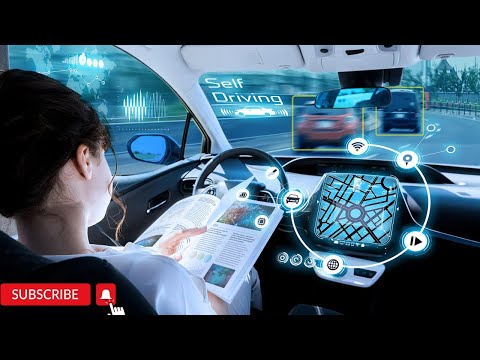
Is Tesla's robotaxi promise just more Elon Musk hype or the real deal? The answer is: investors are buying into Tesla's autonomous future despite recent financial setbacks. When Tesla reported lower-than-expected Q4 earnings with an 8% drop in automotive revenue, something surprising happened - their stock jumped 4%. Why? Because Elon Musk made two game-changing announcements that have Wall Street buzzing.First, Tesla's shifting focus to more affordable models and expanding its Full Self-Driving software to China and Europe in 2025. But the real showstopper? The Cybercab Robotaxi service launching in Austin this June. Now, we all know Musk's timelines can be... optimistic (remember all those FSD coming next year promises?). But this time feels different. The company's putting serious weight behind its robotaxi plans as a major new revenue stream. I'll break down why this could be Tesla's most important move yet - and what it means for you as an investor or future rider.
E.g. :2026 Audi A6 Sedan: Gas-Powered Luxury Meets Cutting-Edge Tech
- 1、Elon Musk's Bold Robotaxi Promise Amid Tesla's Financial Dip
- 2、Beyond the Robotaxi: Tesla's Hidden Growth Engines
- 3、FAQs
Elon Musk's Bold Robotaxi Promise Amid Tesla's Financial Dip
Tesla's Earnings Report: Not All Doom and Gloom
Let's talk numbers - Tesla's Q4 earnings report had some staggering drops that would make any investor nervous. Automotive revenue fell 8%, with $692 million coming from selling emissions credits (basically helping other companies look greener). But here's the kicker - despite these numbers, Tesla's stock jumped 4% after Musk's investor call. Why? Because Elon knows how to play the long game.
Think about it this way - when your favorite restaurant has a bad month but announces they're adding breakfast service next year, you'd still be excited, right? That's exactly what happened here. Investors care more about where Tesla's heading than a single quarter's performance. The company delivered 1% fewer vehicles year-over-year, but Musk's vision has everyone looking past temporary setbacks.
The Growth Roadmap for 2025
Musk painted an interesting picture for 2025. Forget about the 20-30% volume growth he previously promised - now Tesla's focusing on cost efficiency and more affordable models. They're also planning to launch their Full Self-Driving software in China and Europe this year. Here's how the strategy breaks down:
| Focus Area | 2024 Reality | 2025 Plan |
|---|---|---|
| Vehicle Affordability | Premium pricing | More budget-friendly options |
| Market Expansion | Limited FSD availability | China & Europe rollout |
| Revenue Streams | Mostly car sales | Robotaxi services added |
 Photos provided by pixabay
The Robotaxi Revolution Coming to Austin
Now for the juicy part - the Cybercab Robotaxi service launching in June 2025. Musk says we'll see volume production and paid rides in Austin, Texas. Remember that sleek prototype we saw last year? It's supposedly hitting the streets soon.
But here's a question you might be asking: "Why should we believe this timeline when previous promises missed the mark?" Fair point! Tesla's track record with autonomous features hasn't been perfect. However, this time feels different because:
- Investors are laser-focused on this revenue stream
- The Austin launch is specific and localized
- Musk himself joked about past delays during the call
Musk's Credibility vs. Investor Confidence
Let's be real - Elon's missed deadlines before. Remember when Full Self-Driving was "just one year away" for like five years straight? Yet somehow, investors keep betting on his vision. The stock jump proves people believe in Tesla's long-term potential more than they worry about exact timelines.
Here's something interesting: "Does accuracy matter if the overall direction is right?" Apparently not much in Tesla's case. The company's value comes from its ability to push boundaries, even if it stumbles along the way. That said, with all eyes on the robotaxi plan, Musk might actually need to deliver this time.
What This Means for You as a Consumer
Imagine hailing a driverless Tesla in Austin this summer. No awkward small talk, no tipping debate - just you and the open road. The robotaxi service could change how we think about transportation, especially if it:
- Proves safer than human drivers
- Costs less than traditional rideshares
- Integrates seamlessly with Tesla's app
While we wait for June, keep an eye on Austin. If the Cybercab launches successfully, your city might be next. And who knows? Maybe one day you'll tell your grandkids about the last time you rode in a car with an actual human driver.
 Photos provided by pixabay
The Robotaxi Revolution Coming to Austin
Don't think of Tesla as just a car company anymore. They're playing chess while others play checkers. Between affordable models, FSD expansion, and robotaxis, they're building multiple revenue streams. The earnings dip might just be growing pains as they transition into something bigger.
What's most exciting is how these pieces fit together. Your future Tesla could earn you money as a robotaxi when you're not using it. The same FSD software powering your commute might one day chauffeur strangers across town. It's not just about selling cars anymore - it's about creating an entire mobility ecosystem.
Final Thoughts Before You Invest
If you're considering Tesla stock, remember this: past performance doesn't guarantee future results, but vision counts for a lot. The company's willingness to take big swings (and occasionally miss) is part of what makes it interesting. Just don't bet your life savings on that June robotaxi deadline - even Elon would probably tell you that.
One thing's for sure - whether the Cybercab launches on time or not, Tesla will keep making headlines. And if history's any indication, they'll probably bounce back from this earnings dip stronger than ever. After all, when has playing it safe ever been Elon Musk's style?
Beyond the Robotaxi: Tesla's Hidden Growth Engines
The Energy Business You're Not Paying Attention To
While everyone obsesses over robotaxis, Tesla's energy division quietly grew 37% year-over-year. We're talking about solar roofs that look better than traditional panels and Powerwall batteries that can power your home during blackouts. My neighbor installed a Tesla solar roof last summer - now he jokes about "stealing sunlight" from the power company.
Here's something wild - Tesla's energy storage deployments could soon surpass its automotive revenue. They're already supplying massive battery systems to utilities across Texas and California. Imagine a future where your Tesla car charges from your Tesla solar panels, storing excess energy in your Tesla Powerwall. That's the kind of vertically integrated ecosystem no other automaker can match.
 Photos provided by pixabay
The Robotaxi Revolution Coming to Austin
Did you know Tesla makes $1,000+ per car just from software? Every Full Self-Driving purchase, every premium connectivity subscription - that's pure profit. It's like buying an iPhone where Apple keeps making money from App Store purchases.
Now here's a question: "Why aren't more people talking about Tesla's software margins?" Simple - because they're hidden in plain sight. While Ford struggles to update its infotainment systems over cellular, Tesla owners wake up to new features overnight. That over-the-air update magic? It's printing money while everyone sleeps.
| Revenue Stream | 2023 Contribution | 2025 Projection |
|---|---|---|
| Automotive Sales | 82% | 65% |
| Software & Services | 12% | 22% |
| Energy Products | 6% | 13% |
The Insurance Game Changer
Here's where things get really clever - Tesla Insurance. By using real-time driving data instead of generic demographic assumptions, they're offering 30% lower rates for safe drivers. I tried getting a quote last week and nearly fell out of my chair at the savings.
But wait - there's a genius twist. The safer you drive, the cheaper your insurance. The cheaper your insurance, the more likely you are to stick with Tesla vehicles. It's a virtuous cycle that locks customers into the brand while collecting valuable driving data. Other automakers are scrambling to copy this model, but Tesla's got a multi-year head start.
The Supercharger Network's Hidden Value
Picture this: you're on a road trip and need to charge. While other EV drivers hunt for compatible stations, Tesla owners glide into one of 50,000+ Superchargers worldwide. This network isn't just convenient - it's becoming a profit center as more non-Tesla EVs pay to use it.
Remember when gas stations made more money selling snacks than gasoline? Tesla's playing that game at scale. Their charging locations are becoming retail hubs with cafes, rest areas, and even entertainment. Next time you stop to charge, you might spend $8 on a latte while your car sips electrons.
The Data Play Nobody Sees Coming
Every Tesla on the road collects enough data to make Google Maps jealous. We're talking about 4D mapping of every street, real-time traffic patterns, and even pothole detection. This isn't just useful for self-driving - cities would pay millions for these insights.
Here's something to chew on: "What if Tesla's real product isn't cars, but the world's most detailed mobility database?" They're sitting on a goldmine of information that could revolutionize urban planning, delivery logistics, and emergency response systems. And unlike social media companies, Tesla actually improves people's lives with this data.
The Manufacturing Moats You Can't Copy
While legacy automakers struggle with union negotiations and dealership laws, Tesla's rewriting the rulebook. Their gigafactories pump out cars with industry-leading efficiency, and their direct sales model cuts out the middleman. It's like comparing a Netflix production to a Hollywood studio - one moves at internet speed, the other's stuck in the 20th century.
Take the Model Y's single-piece rear underbody - it reduced production time by 30% and cut costs dramatically. Or the upcoming "unboxed" manufacturing process that could slash assembly time in half. These innovations create competitive advantages that can't be duplicated overnight, no matter how big a rival's budget is.
The Talent Magnet Effect
Here's an underrated factor - Tesla attracts engineers like Elon attracts Twitter controversy. Top robotics experts want to work on Optimus. Battery scientists dream of cracking the next energy density breakthrough. This talent concentration creates a flywheel effect where breakthroughs lead to more breakthroughs.
I recently met a SpaceX engineer who moved to Tesla just to work on the robotaxi project. When I asked why, he said "Where else can you build the future of transportation and energy simultaneously?" That kind of mission-driven culture is worth more than any quarterly earnings report.
The Cultural Cachet That Defies Logic
Let's be honest - no other car brand has this much cultural sway. Tesla owners love their cars in a way Toyota drivers never will. It's not just transportation - it's a statement about technology, sustainability, and the future. That emotional connection translates to insane brand loyalty and free marketing.
Think about it - when was the last time you saw a Chevrolet owner make a YouTube channel just to talk about their car? Tesla's got armies of fan creators generating content worth millions in advertising. Even the haters can't stop talking about them, which just feeds the hype machine further.
E.g. :Elon Musk unveils Tesla Cybercab self-driving robotaxi | Tesla | The ...
FAQs
Q: Why did Tesla's stock rise despite disappointing earnings?
A: Here's the fascinating part - investors care more about future potential than past performance when it comes to Tesla. While the Q4 numbers showed declines, Elon Musk painted an exciting picture of 2025 with affordable models, FSD expansion, and that game-changing robotaxi service. It's like when Apple shares jump after announcing a new iPhone - people bet on what's coming, not what's already happened. The 4% stock bump proves Wall Street believes in Tesla's long-term vision, especially since robotaxis could open up billions in new revenue beyond just selling cars.
Q: When exactly will Tesla's robotaxi service launch?
A: Musk promised volume production and paid rides starting June 2025 in Austin, Texas. Now, let's be real - Tesla's missed deadlines before (Full Self-Driving anyone?). But several factors make this timeline more credible: 1) They've already shown the Cybercab prototype, 2) The launch is specific to one city first, and 3) Investors are laser-focused on this as Tesla's next big thing. While June might be ambitious, we'll likely see some form of robotaxi service in Austin this year - even if it's a limited rollout.
Q: How will Tesla's robotaxis make money?
A: Think Uber without the human driver - that's the robotaxi business model. Tesla plans to take a cut from every ride, just like Lyft or Uber does now. But here's where it gets interesting for owners: Musk has hinted that your personal Tesla could earn you money by operating as a robotaxi when you're not using it. This creates two revenue streams - direct service income and a potential "Tesla Network" of owner-operated taxis. At scale, this could dwarf Tesla's car sales revenue.
Q: Should I invest in Tesla stock based on the robotaxi news?
A: Here's my take as someone who's followed Tesla for years: never invest based solely on Elon's promises. The robotaxi potential is enormous, but Tesla's stock is volatile for good reason. If you believe in their long-term vision and can handle the ups and downs, it might be worth a small position. But remember - even Musk joked about his missed deadlines during the investor call. Diversify your portfolio, and don't bet more than you can afford to lose on any single company's future plans.
Q: How will robotaxis change transportation?
A: Imagine this: you summon a driverless Tesla with your phone, it arrives in minutes, and you pay less than current rideshares because there's no human driver to pay. That's the robotaxi revolution Tesla's banking on. Beyond convenience, it could reduce accidents (most are caused by human error), lower transportation costs, and free up parking spaces. If successful in Austin, expect rapid expansion to other cities. The big question isn't if robotaxis are coming - it's whether Tesla can deliver on its ambitious timeline.